—Ovid, Metamorphoses
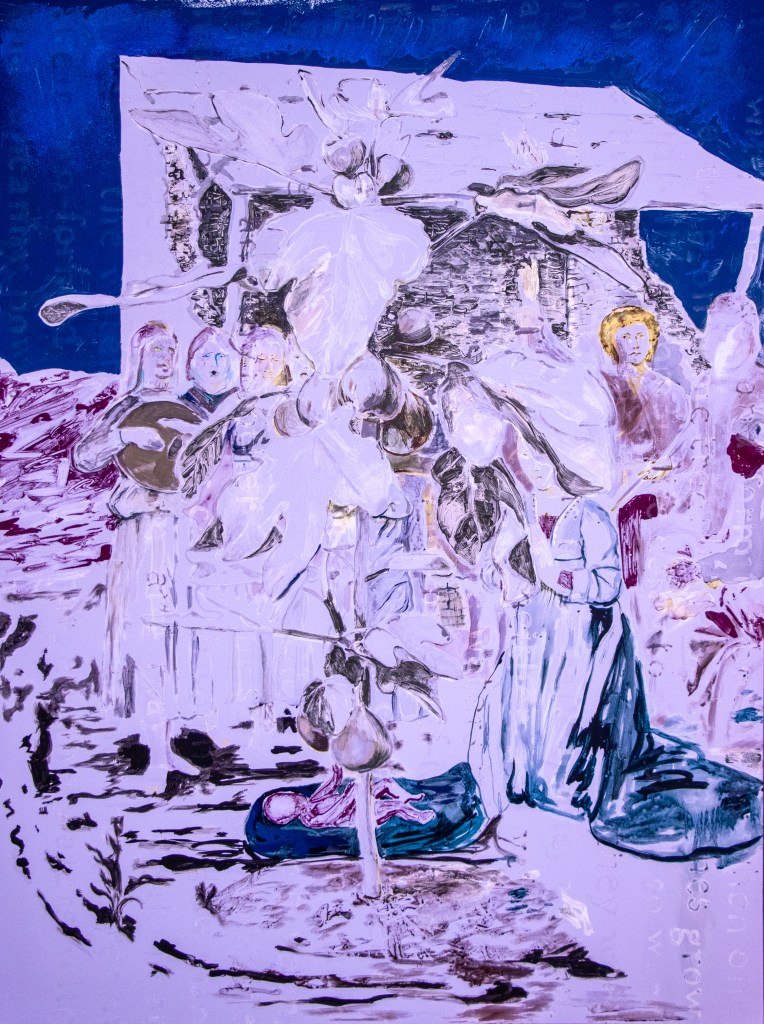
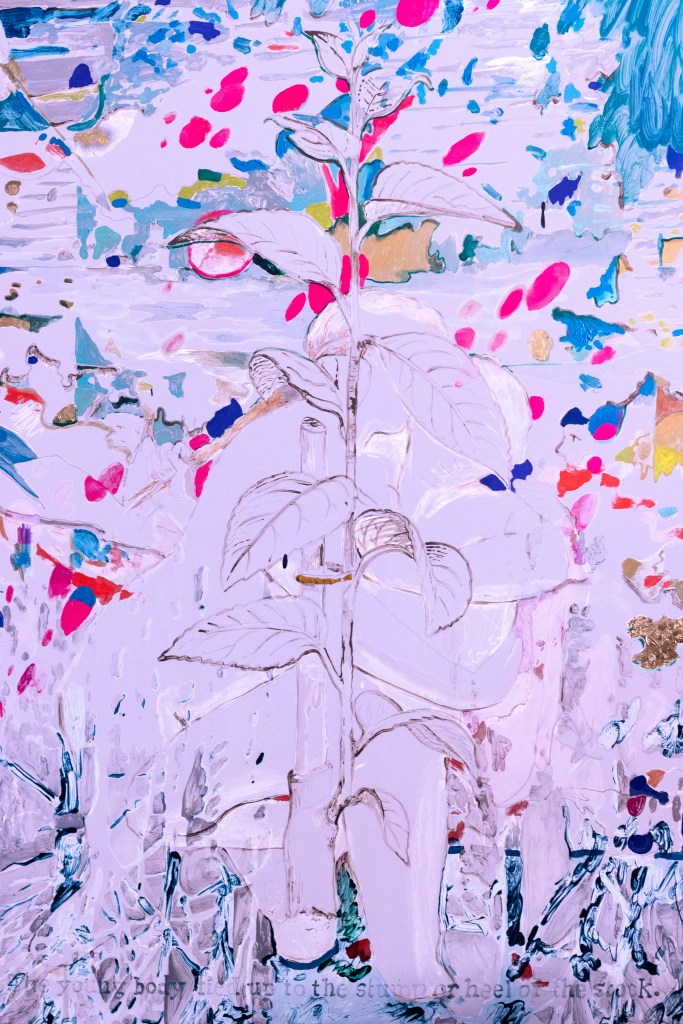
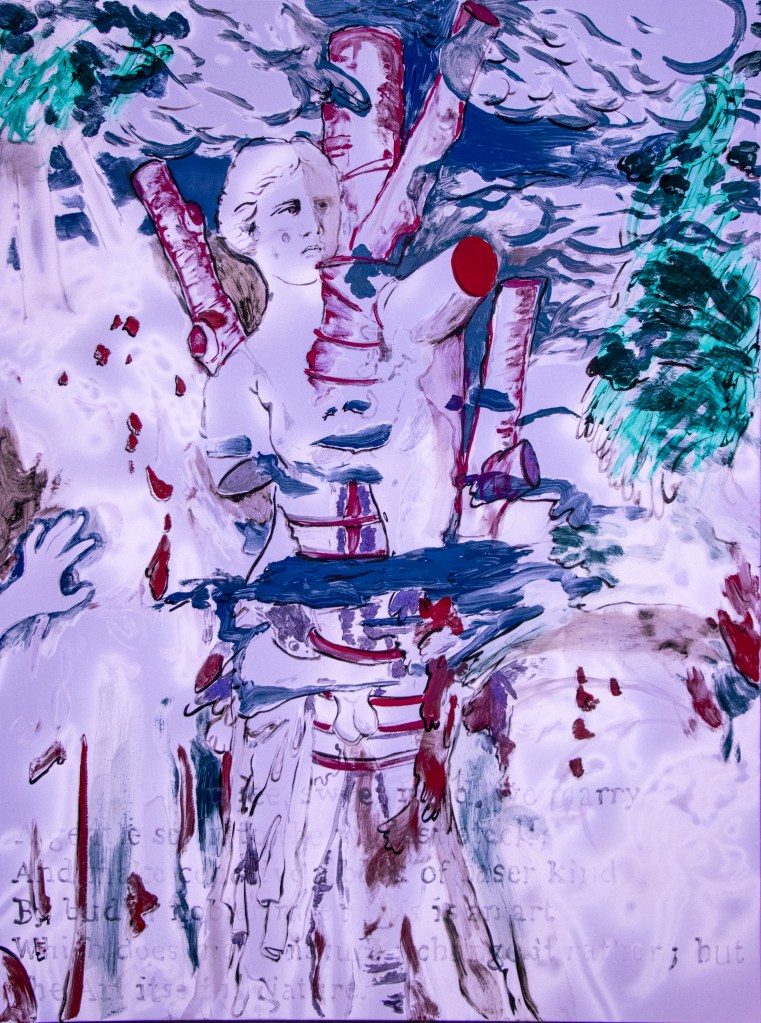
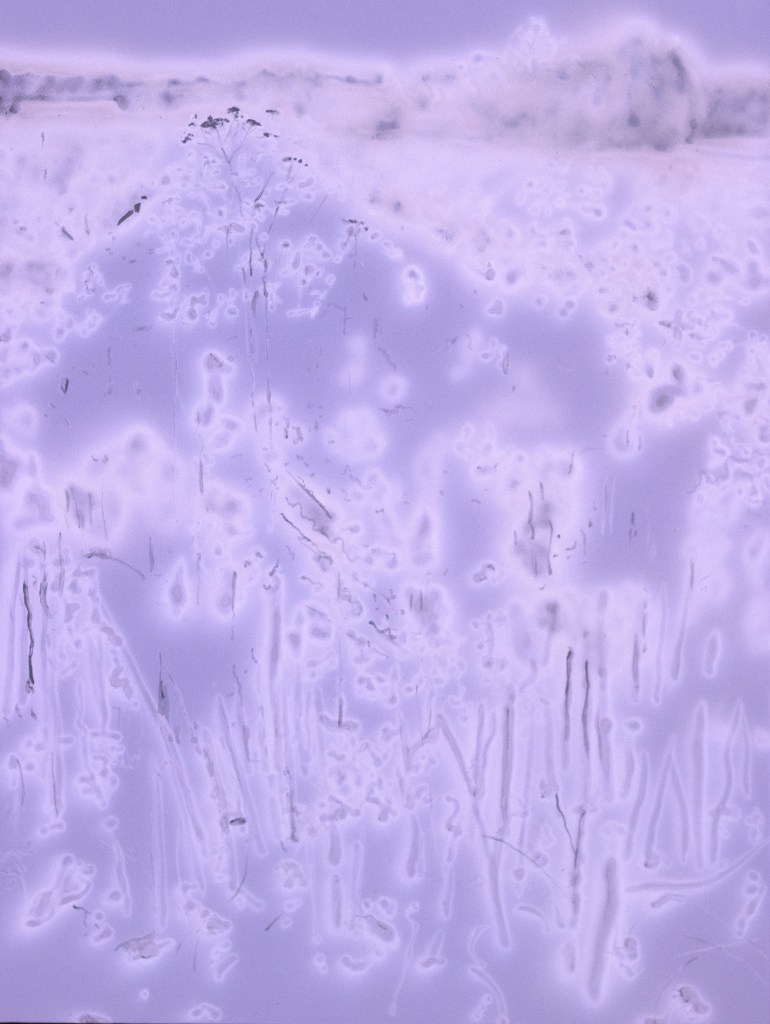
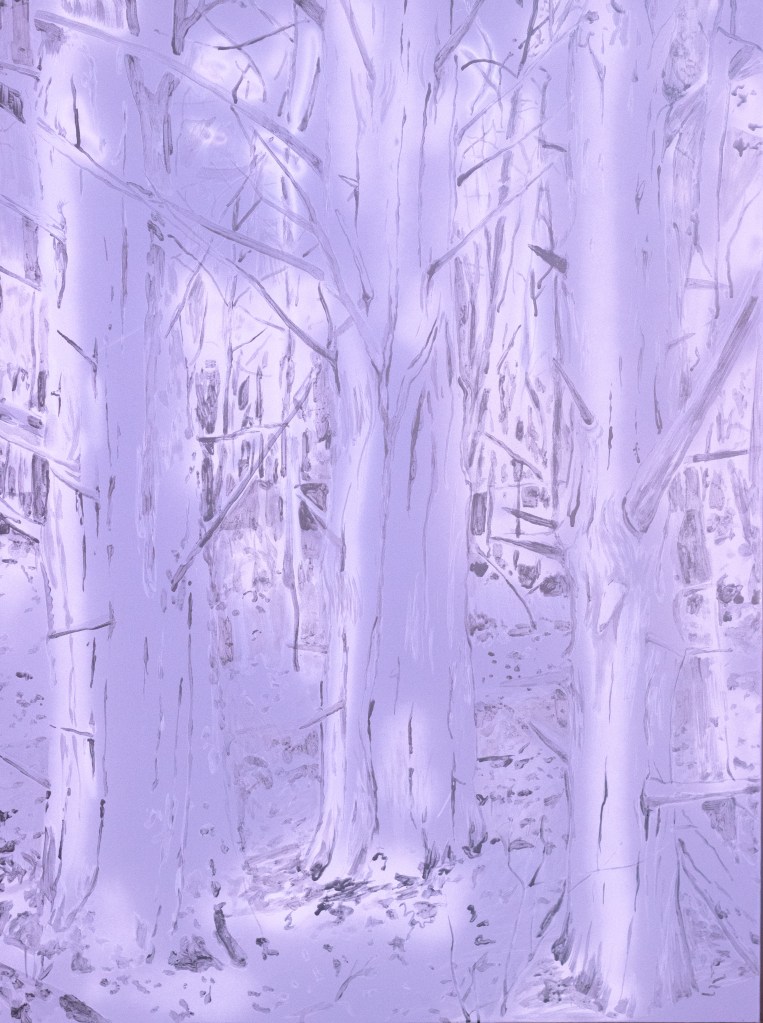
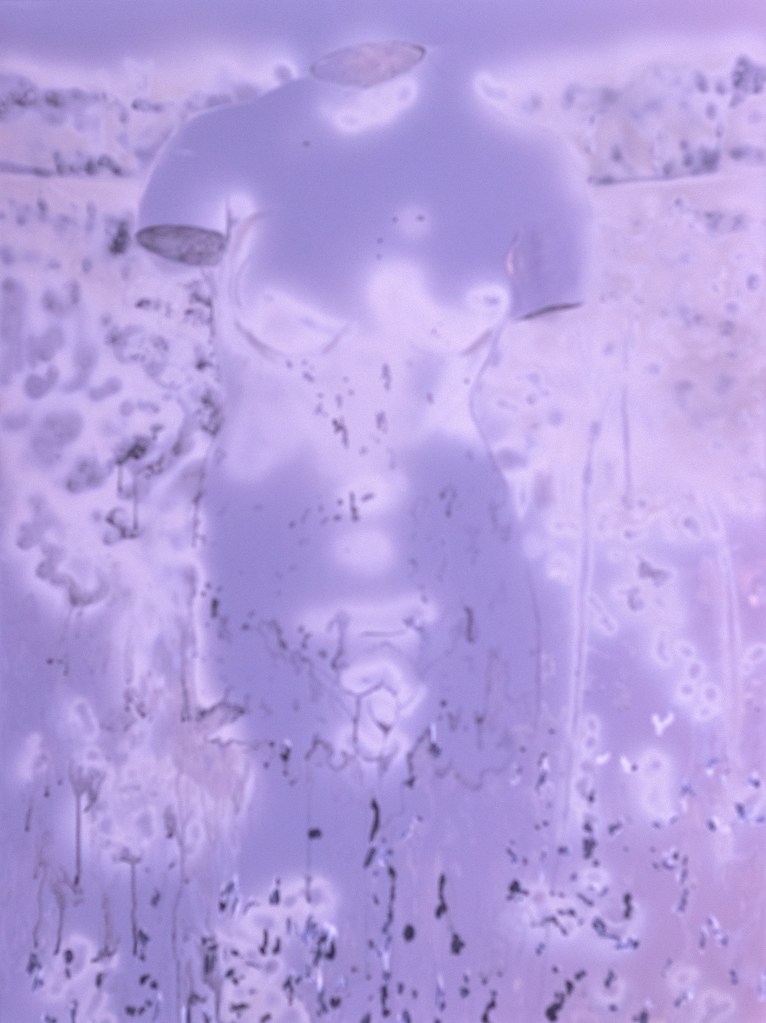
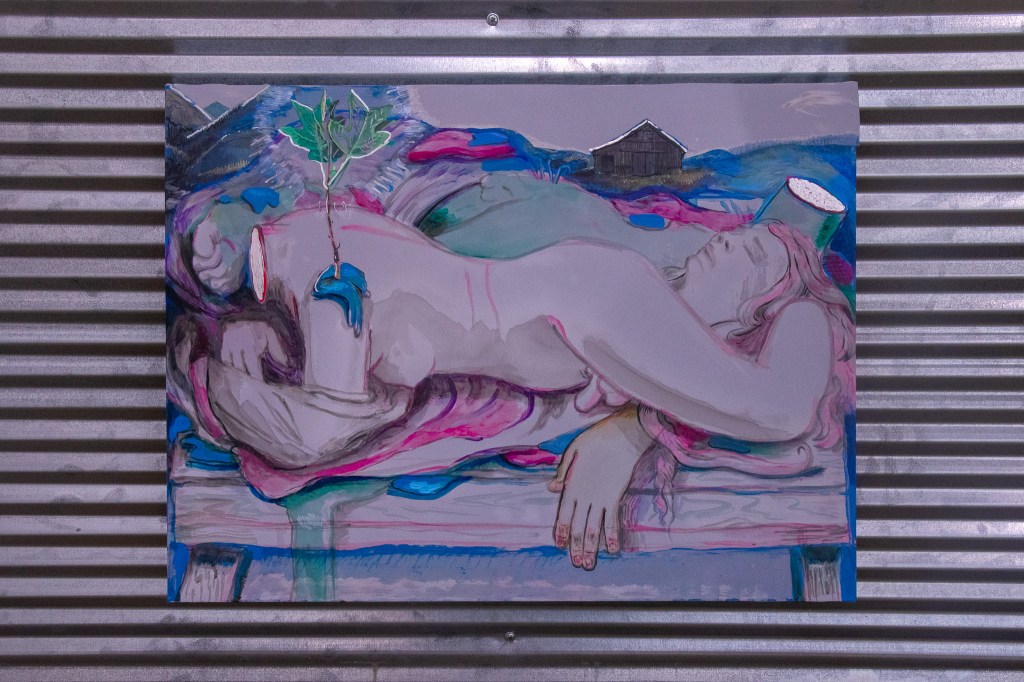
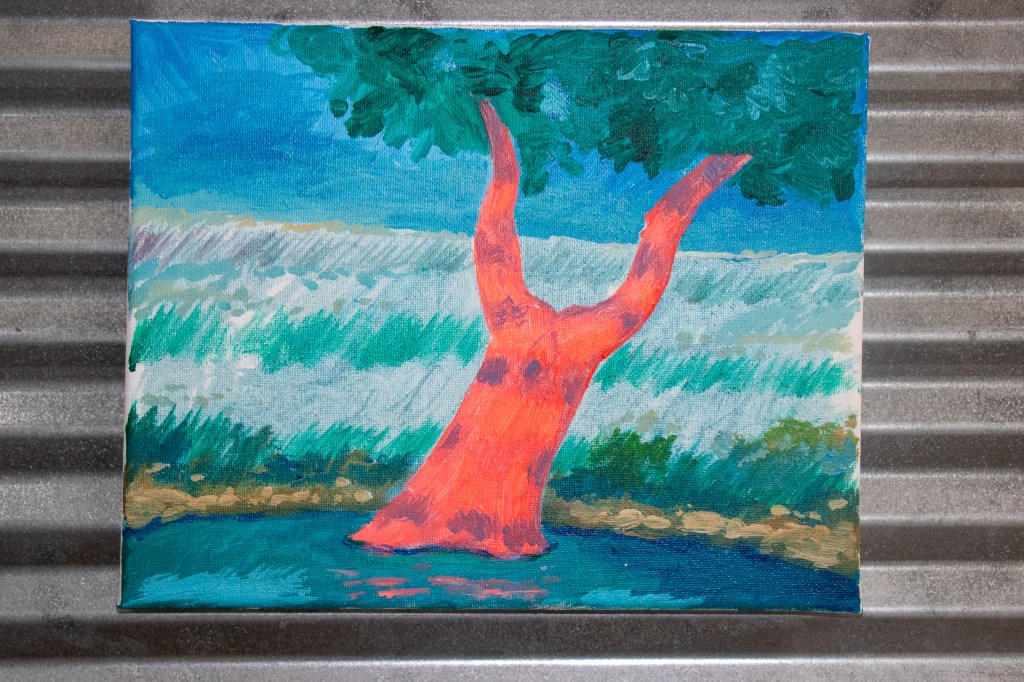
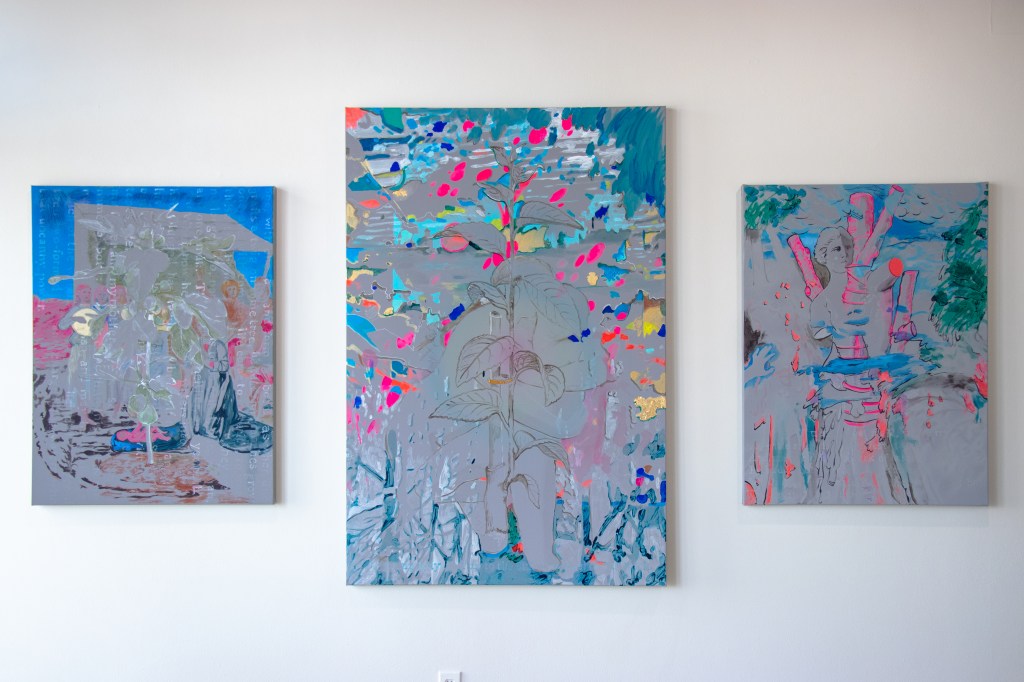
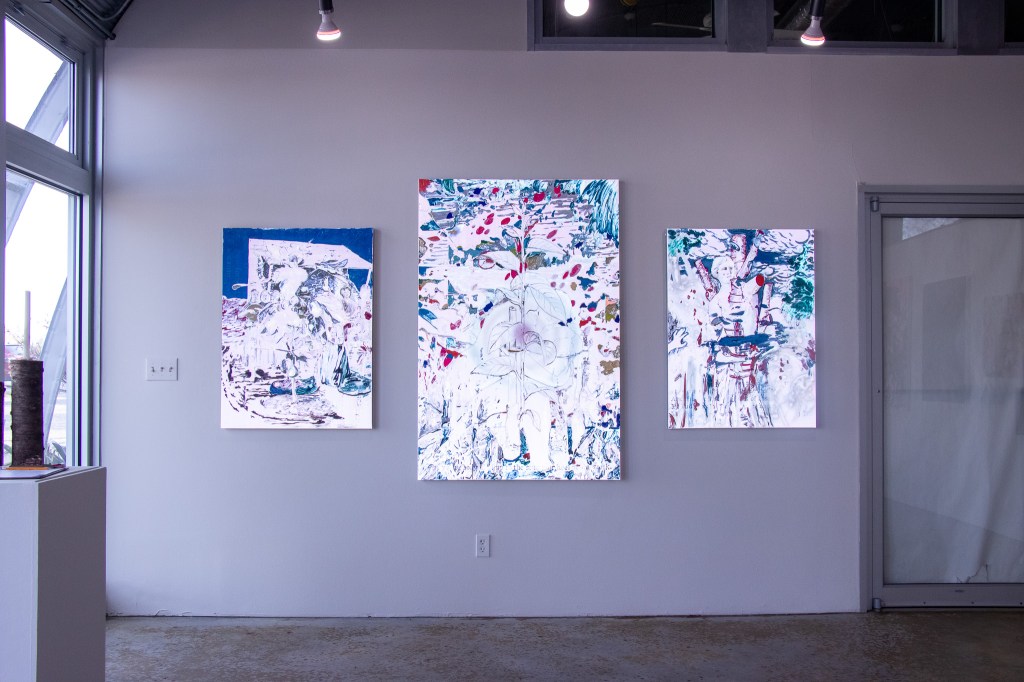
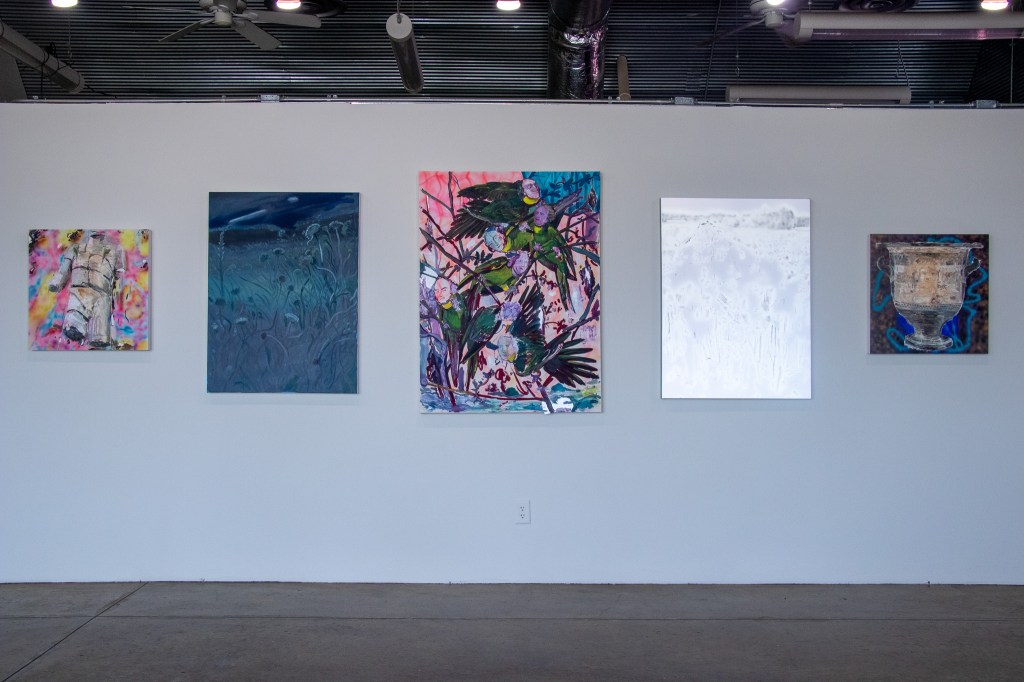
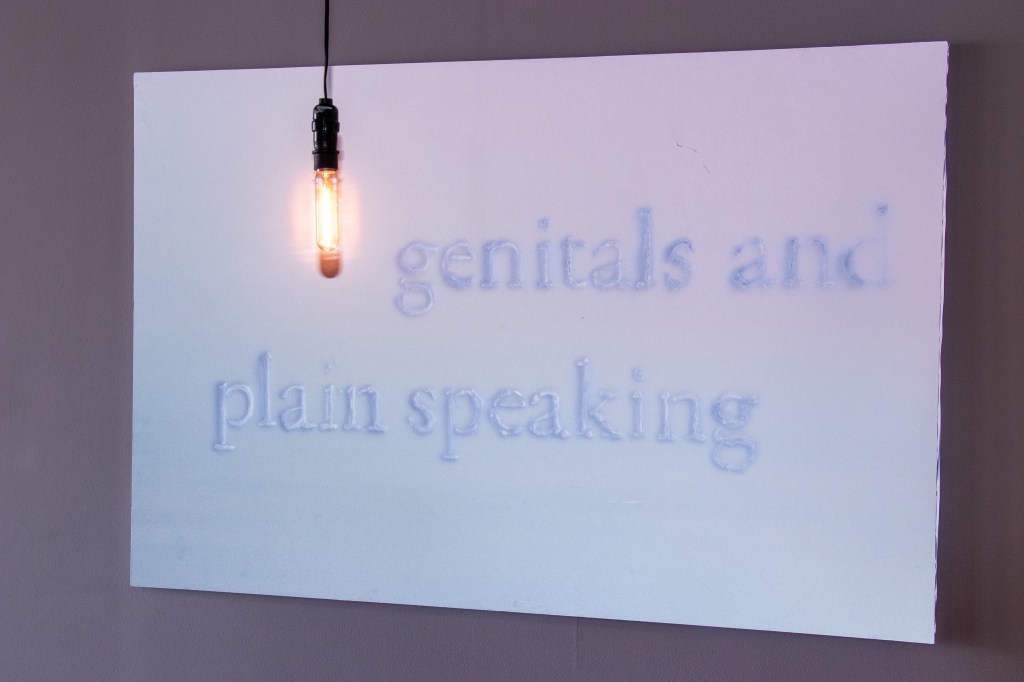
Installation Views: Quonset Hut, 2026
ARTIST STATEMENT
You see, sweet maid, we marry
a gentler scion to the wildest stock,
And make conceive a bark of baser kind
By bud of nobler race. This is an art
Which does not mend nature; change it rather; but
The art itself is Nature.
–Shakespeare, The Winter’s Tale. 4.4.92-97
I feel a quiet kinship with trees, not the tall, cultivated ones grown for lumber or profit, but the crooked, sprawling ones left untouched. These trees lack value because they defy utility. Chuang Tzu, through Thomas Merton, reminds us: the tree that grows bent and wild is spared the axe.
In this series, I draw parallels between gender-affirming care and the horticultural act of grafting. Both represent intimate, intentional processes of cutting, healing, and reshaping. Hybrids may stand a better chance at survival in different climates and difficult times. For example, In “A Gentle Body Grafted to the Wildest Stock” I remix stories of non-binary sex in Western culture (Salmacis and Hermaphroditus of Ovid’s Metamorphoses) with gender performativity (Butler, Who’s Afraid of Gender?) and botanical illustration. By crossing foundational myths with botanical arts and queer theory, They Seemed Neither, and yet Both aims to challenge strict notions of binary logic, utility, and straightness: what societies demand of forests and people.
Queerness is not an anomaly, but remains a natural, ancient, and vital expression of life. Botanical discourse shows that many trees are cosexual, bearing self-fertile flowers with both male and female reproductive parts. Some tree species will flower male flowers at the top and female flowers at the bottom in the same season. Other species, such as the ginkgo, produce separate sexes and even shift between them across a lifetime; some species change sex after sustaining injuries. The evolutionary record shows that sexual fluidity and hermaphroditism are not exceptional but pervasive.
For many of these pieces, I paint on a substrate historically known as “silver screen.” Stanley Kubrick employs this fabric to project seamless backdrop images in the opening scenes of 2001: a Space Odyssey; the material offers a powerful luma key for photography and filmmaking, predating greenscreen technology. I chose this surface for its reflective qualities: silver screen makes a haptic connection to sight and accentuates the strangely numinous and often hidden aspects of sex and gender expression across time, culture, and species. This reflectiveness and hidden messages therein may also cause the viewer to see multiplicity/or to question surface assumptions.
This exhibition is a tribute and a reclamation: a celebration of uselessness as wisdom, of crookedness as beauty, of queerness as survival. Gender, like a tree, may not remain fixed. Some limbs bear both fruit and pollen. Some split and recombine. Some are barren, some grafted, some seeded. The forest does not question this multiplicity, but rather thrives because of its ability to adapt and change. Our ancestors are trans. Our bodies, like flowers, are perfect. Our futures, like forests, are queer.

